🏓 Pickleball Paddles
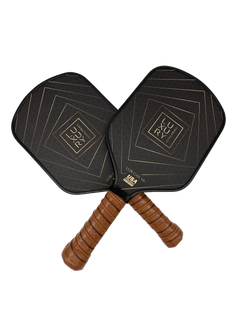
Luxury Custom Pickleball Paddle LUX CAS 16
The Carbon Fiber Heavyweight That Finally Calms Your Hands 🥒💥
LUXE Pickleball Core Collection Green
A head-turning carbon fiber pickleball paddle in vibrant Green — textured for spin, built with a polypropylene honeycomb core, and approved for all skill levels from beginner to pro. 🟢
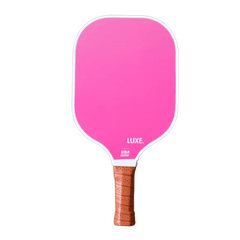
Aesthetic Solids – Pink Pickleball Paddles
.
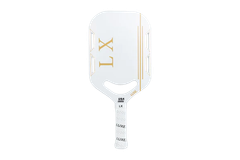
Top luxe LX pickelball paddles
Top luxe LX Pickleball Paddles - Carbon Fiber Pro Set for Spin and Control
JOOLA Radius CGS 16 pickleball paddle
Discover the JOOLA Radius CGS 16 pickleball paddle. Featuring a Carbon Grip Surface and Response Honeycomb Polymer core for ultimate spin, control, and power.
franklin Carbon STK pickleball paddle
Dominate the court with the USA Pickleball approved Franklin Carbon STK pickleball paddle. Engineered with a premium carbon fiber face for elite spin.
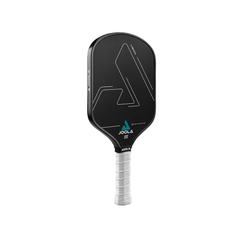
Carbon fiber pickleball paddle: JOOLA Vision CGS 16
Looking for a serious carbon fiber pickleball paddle? The JOOLA Vision CGS 16 brings raw spin, a honeycomb core, and an elongated handle. No fluff, just performance.
The JOOLA Simone Jardim 16 : the top Pickleball paddles for beginners
Stop buying junk. The JOOLA Simone Jardim Hyperion Swift 16 stands alone among pickleball paddles for beginners as the only tool that fixes your swing before you even make it.
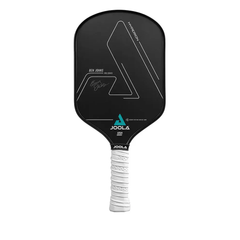
Top Pickleball Paddles : JOOLA Ben Johns Hyperion CFS 16MM
We examine if the Ben Johns Hyperion CFS 16MM belongs on the list of top pickleball paddles. A straightforward look at the grit, the weight, and the physics of the World #1's chosen gear.
🏓 Stepping onto the pickleball court for the very first time is nothing short of electric. The crisp thwack of the plastic ball, the lightning-fast exchanges at the kitchen line, and the instant camaraderie among players make it obvious why this sport has exploded into a global sensation. But here's the hard truth: as your skills evolve, that wooden beater or generic starter paddle you grabbed on a whim is going to hold you back — and fast. 🚀
Your paddle isn't just another piece of gear. It is quite literally an extension of your arm, your primary conduit to every dink, drive, and decisive smash. Yet the sheer ocean of pickleball paddles flooding today's market is staggering. Between varying shapes, core materials, face textures, and weight configurations, staring down a wall of options can feel genuinely overwhelming. 😵
Here's the good news: choosing the right equipment isn't about dropping a fortune on the most expensive model. It's about discovering the perfect match for your unique biomechanics, playing style, and tactical approach. This comprehensive guide walks you through every technical specification, material innovation, and construction nuance — so you can stride onto the court with absolute, unshakable confidence. 💪
🎯 1. Understanding Your Personal Playstyle
Before diving headfirst into paddle specs, you must take an honest inventory of who you are as a player. The ideal setup for a former college tennis standout will look radically different from the perfect tool for a placement-obsessed senior strategist. In pickleball, the fundamental strategic divergence boils down to three archetypes: power, control, and all-court versatility.
💥 The Power Player
Power players thrive on unapologetic aggression. They live for deep baseline drives that pin opponents behind the baseline, fast-paced volleys that steal reaction time, and thunderous overhead smashes that end points with an exclamation mark. These athletes crave power paddles that generate heavy momentum and explosive "pop," sending the ball screaming off the face. If you come from a racquetball or tennis background where swinging big is second nature, you likely lean toward this aggressive power game naturally. 🔥
🧠 The Touch Player (Control)
Touch players see pickleball as a game of physical chess — and they intend to win the mental battle. They rely on soft, surgical dinks, precisely calibrated third-shot drop shots, and the uncanny ability to reset blistering pace into gentle, unattackable balls that die in the kitchen. These players gravitate toward control paddles that behave like a velvet cushion, absorbing the opponent's energy and offering maximum touch, nuanced feel, and pinpoint ball control. 🎨
⚖️ The Hybrid Player
Most intermediate-to-advanced players aspire to a balanced, all-court game — and for good reason. For these competitors, maximizing both ball control and raw power simultaneously is the holy grail. Fortunately, modern engineering has delivered the hybrid paddle: a marvel of design that offers exceptional equilibrium. These paddles let you drive with authoritative depth when the moment calls for it, while preserving the butter-soft touch needed for delicate kitchen exchanges. 🌟
⚖️ 2. Paddle Weight, Swing Weight & Balance Dynamics
If you take away only one specification from this entire guide, let it be weight. Weight dictates everything: how the paddle feels in your hand, how quickly you can react at the net, how much kinetic force transfers into the ball, and — critically — how your elbow feels the morning after a three-hour session. Understanding paddle weight means balancing maneuverability against mass. 🎚️
🪶 Lightweight (Under 7.3 oz)
- ✅ Pros: Jaw-dropping maneuverability. Lightweight builds enable lightning-fast hand speed — a colossal advantage during rapid-fire volley exchanges at the net. They also deliver heightened touch sensitivity for those feathery dinks.
- ❌ Cons: Less inherent power. Physics doesn't compromise: with less mass comes less kinetic energy ($F=ma$). You'll need to swing harder to generate deep baseline drives. Light paddles also absorb less shock, meaning more impact vibration travels straight into your arm.
- 🏆 Best For: Pure touch players, table tennis converts, and anyone who prioritizes blistering hand speed above all else.
🥇 Mid-Weight (7.3 to 8.3 oz)
- ✅ Pros: The Goldilocks zone. Mid-weight paddles deliver the best of both worlds: enough mass to generate satisfying depth and power, without sacrificing the quick-twitch hand speed that wins firefights at the kitchen line.
- ❌ Cons: They don't specialize at either extreme. Absolute power seekers and absolute speed demons may notice slight compromises.
- 🏆 Best For: The overwhelming majority of players — from day-one beginners to touring professionals. If you're unsure where to start, a mid-weight paddle around 7.8–8.0 oz is your safest, smartest bet.
🏋️ Heavyweight (Over 8.3 oz)
- ✅ Pros: Maximum plow-through and rock-solid stability. A heavy paddle drives through the ball like a freight train thanks to enhanced momentum. It also resists twisting fiercely — off-center hits outside the sweet spot stay far more controlled.
- ❌ Cons: Can feel sluggish during frantic net exchanges. More importantly, swinging a heavy paddle repetitively invites acute muscle fatigue and, over time, potential joint strain.
- 🏆 Best For: Tennis crossovers accustomed to heavier racquets, and singles players who need massive baseline firepower.
🩺 A Note on Joint Health & Vibration
Pickleball elbow (lateral epicondylitis) is no joke. If you're dealing with joint pain or hoping to avoid it entirely, steer clear of ultra-light paddles that transmit shock directly to your tendons — and also avoid ultra-heavy paddles that overstress your muscles. Instead, target a mid-weight paddle engineered specifically for vibration dampening and reduced arm fatigue. Many premium modern paddles feature specialized foam core injection around the perimeter, absorbing shock before it ever reaches your elbow. 🛡️
🧬 3. Demystifying Paddle Cores & Thickness
If the paddle face is the skin of your equipment, the core is the engine. Over the decades, cores have evolved from solid wood to Nomex (that stiff, cardboard-like material used in aviation) to aluminum honeycomb. Today, however, one material reigns supreme. 👑
🍯 Polymer Honeycomb Core Technology
Nearly every high-quality modern paddle relies on a polymer honeycomb core. This high-tech plastic blend — formed into an intricate honeycomb lattice — is remarkably durable, impressively lightweight, and delivers a quiet, soft, plush impact feel. Polymer cores have quite literally revolutionized pickleball by enabling players to swing with aggressive intent while maintaining the responsive, cushioned feedback essential for delicate dinks.
📏 The Effect of Paddle Thickness on Performance
Once you've committed to polymer, you must choose your core thickness. This single variable dramatically reshapes paddle behavior, and the effect of paddle thickness on performance truly cannot be overstated.
- 📎 Thin Cores (10mm–13mm): Built for power paddles. With less material to absorb impact, the ball compresses minimally and springs off the face with snappy, immediate "pop." They're loud, responsive, and aggressive — but they offer a smaller sweet spot and less overall finesse.
- 📐 Standard Cores (14mm): A beautifully balanced middle ground. These paddles blend pop and control seamlessly, making them excellent for hybrid players chasing full-court versatility.
- 📚 Thick Cores (16mm and up): Tailor-made for control paddles. The thicker polymer acts like a plush shock absorber. When the ball meets a 16mm face, it sinks in ever so slightly, increasing dwell time — those precious milliseconds the ball remains connected to the paddle. Longer dwell time translates directly into expanded control and the ability to absorb your opponent's hardest drives with grace.
💡 Actionable Tip: If you struggle with popping the ball up high during dink rallies, switch to a 16mm core. The extra thickness immediately extends dwell time, softening your touch and keeping your drops lethally low. 🤫
🪞 4. Face Materials: The Hitting Surface Decoded
The material bonded to the outside of your core determines how the paddle face grabs, grips, and releases the ball. When comparing options, you'll repeatedly encounter the classic debate of graphite vs composite — and the more modern showdown of carbon fiber vs fiberglass. Let's settle it. 🔬
🧵 Fiberglass (Composite)
When brands say "composite," they're almost always referring to a fiberglass face blend.
- 🔍 Characteristics: Fiberglass is inherently flexible. When the ball strikes a fiberglass face, the material flexes inward (think mini trampoline) and catapults the ball back with added velocity.
- ✅ Pros: Exceptional built-in power and addictive "pop." You don't need to swing out of your shoes to generate depth.
- ❌ Cons: Less natural texture for heavy spin generation, and a slightly more compact sweet spot relative to woven carbon fiber.
- 🏆 Best For: Power-oriented players and those who want easy, effortless depth on baseline drives.
🖤 Carbon Fiber
Carbon fiber is extraordinarily stiff, lightweight, and durable — a woven marvel of modern materials science.
- 🔍 Characteristics: Because a carbon fiber surface barely flexes, the ball's energy transfers almost entirely into the polymer core beneath. The result? A muted, ultra-controlled, beautifully predictable feel.
- ✅ Pros: Generous sweet spot, surgical-grade control, and outstanding long-term durability.
- ❌ Cons: Less free power; you must supply your own swing speed and physical force.
- 🏆 Best For: Control connoisseurs, precise dinkers, and advanced players who generate their own effortless power.
🌀 Texture & Spin Mechanics
The impact of friction and texture on spin generation is profound in the modern game. Spin arises from physical friction between the paddle face and the ball. A raw carbon fiber surface supplies immense natural grip, allowing you to brush up aggressively for vicious topspin or carve underneath for sharp, skidding slices. Advanced options like thermoformed raw carbon textures push friction right up to the allowable roughness boundary — letting you hit harder while the ball dips sharply into the court instead of sailing long. 🎯
⚠️ Beware of Applied Grit: Some budget paddles use spray-on grit (think sandpaper) over a standard face to create temporary texture. This wears smooth after mere months of regular play. Always opt for paddles where the texture is woven inherently into the material — like raw carbon fiber or peel-ply fiberglass — for lasting, rule-compliant spin generation potential.
📐 5. Paddle Shapes & Dimensions
The sport's governing body decrees that a paddle's combined length and width cannot exceed 24 inches. How manufacturers distribute those 24 inches creates a pivotal strategic decision around the shape of your paddle. The primary fork in the road: traditional standard-shaped paddles versus modern elongated paddles. 🗺️
🟦 The Standard-Shaped Paddle (Widebody)
- 📏 Dimensions: Typically 15.5–16 inches long × 8–8.25 inches wide.
- 🤲 The Feel: Reminiscent of an oversized table tennis paddle. Because they're wider, the sweet spot stretches generously across the horizontal axis.
- ✅ Pros: Unbelievably forgiving. Misjudge a ball and catch it near the outer edge? This shape still returns a decent, predictable ball. They're also supremely maneuverable for blocking rapid drives at the net.
- 🏆 Best For: Beginners building confidence, doubles specialists, and table tennis converts craving a dependable, wide hitting surface.
🗡️ Elongated Paddles
- 📏 Dimensions: Typically 16.5 inches long × 7.5 inches wide.
- 🤲 The Feel: Thinner, longer, sleeker — pushing the sweet spot further away from your grip hand.
- ✅ Pros: Extended reach (invaluable for digging out low kitchen balls) and amplified leverage. Because the sweet spot sits farther from the grip, the paddle head travels faster at the contact point due to torque physics, generating noticeably more power and spin. Reach, leverage, and whip — all in one package.
- ❌ Cons: A narrower horizontal sweet spot. Off-center strikes on the outer edges punish you with dead balls or face twisting.
- 🏆 Best For: Tennis crossovers, advanced singles players, and anyone hunting maximum power, leverage, and extended reach.
🔷 Hybrid & Aerodynamic Shapes
Recently, innovative manufacturers have introduced hybrid paddle designs — think curved tops, tapered throats, and sleek teardrop silhouettes. These shapes aim to marry the wide, forgiving sweet spot of a standard-shaped paddle with the reach and leverage of elongated paddles. Curved tops also reduce aerodynamic drag, enabling faster swing speeds during frantic hand battles at the net. 💨
🖐️ 6. The Handle: Grip Size & Length
It's a shockingly common mistake: obsessing over the paddle face while completely ignoring the handle. An incorrect grip can sabotage your stroke mechanics, ruin shot accuracy, and even trigger serious elbow pain. Let's fix that. 🔧
📐 Determining the Correct Grip Size for Your Hands
Grip circumference typically ranges from 4 inches to 4.375 inches. Playing with a grip that's too large forces you to squeeze excessively, tiring out your forearm muscles. Playing with a grip that's too small lets the paddle twist in your hand on high-velocity impact.
- ☝️ The Index Finger Test: Grip the paddle in your normal playing grip (like an Eastern grip). Check the gap between the tip of your ring finger and the base of your palm. You should be able to snugly slide the index finger of your non-hitting hand into that space. Extra room? Grip is too big. Finger won't fit? Grip is too small.
- 📏 The Ruler Test: Open your dominant hand with fingers extended together. Measure from the middle crease of your palm to the tip of your ring finger. That measurement, in inches, corresponds directly to your ideal grip size.
💡 Actionable Tip: When in doubt, buy the smaller grip. You can always build up a handle by wrapping an inexpensive overgrip around it. Making a thick handle thinner? Nearly impossible. 📌
📏 Handle Length
- 📎 Short Handles (4.5–5 inches): Maximize the usable surface area of the paddle face. Perfect for one-handed players who want every available millimeter of hitting real estate.
- 📐 Long Handles (5.25–5.75 inches): Essential for tennis converts wielding a two-handed backhand. The extra length accommodates the second hand comfortably and adds massive leverage for driving power.
🛡️ 7. Perimeter Construction & Edge Guards
As you examine a paddle's outer rim, you'll notice a critical structural difference: the choice between edgeless and edge guard construction. This isn't merely cosmetic — it directly impacts durability, aerodynamics, and mishit forgiveness. 🔍
🛡️ Traditional Edge Guards
Most paddles feature a distinct plastic rim wrapped tightly around the perimeter.
- ✅ Pros: Excellent structural protection. Scrape the court digging out a low ball? The edge guard shields the internal honeycomb core from crushing or delaminating. It also adds perimeter weighting, which stabilizes the paddle face beautifully.
- ❌ Cons: The edge guard creates a small raised lip. If a ball catches that lip, it ricochets unpredictably — often costing you the point.
✨ Edgeless Design
Edgeless paddles use specialized internal molding or ultra-thin perimeter tape to seal the core, eliminating the raised plastic lip entirely.
- ✅ Pros: Sleek aesthetics, improved aerodynamics, and complete elimination of "lip mishits." The usable face extends to the absolute edge of the paddle.
- ❌ Cons: Highly vulnerable to cosmetic and structural damage. A hard scrape against concrete can chip or crack the outer perimeter severely.
💡 Pro Tip: If you go edgeless to maximize your hitting surface, apply protective edge tape around the rim. It's a cheap sacrificial layer that preserves your investment. 🎯
📋 8. Navigating Equipment Standards & Regulations
Whether you're gunning for gold at a sanctioned tournament or just battling it out at the local park, ensuring your gear is legitimate matters. Always look for the official USA Pickleball Approved stamp printed directly on the paddle face or throat. ✅
The governing body enforces strict equipment standards to guarantee fairness, safety, and acoustic compliance across the sport:
- 📐 Deflection Tests: Paddles cannot be perfectly rigid, but they also cannot behave like trampolines. Each model must pass a rigorous deflection test ensuring it doesn't produce dangerously unreturnable ball speeds.
- 🔬 Roughness Limits: Texture is allowed and encouraged for spin generation, but USA Pickleball caps surface roughness. Paddles are tested with precision roughness gauges to prevent physics-breaking, unfair spin levels.
- 🚫 Alterations: You may legally add lead tape to the perimeter for weight customization and you can swap your grip freely. But applying aftermarket decals, sandpaper, or spray-on grip to the paddle face renders it strictly illegal for tournament play.
Always consult the official USA Pickleball approved paddle list online before a major purchase. Using an unapproved paddle in sanctioned competition means immediate forfeiture — no exceptions. 📜
🌱 9. Best Practices for Beginners
If you're brand new to the sport, staring down carbon fiber weave charts and millimeter-thickness guides probably feels like drinking from a fire hose. Relax. You don't need a $250 professional tour paddle on day one. You need something reliable, forgiving, well-constructed, and reasonably priced. 🧘
When searching for the best entry-level pickleball paddles, keep these parameters front and center:
- 🧵 Material: Look for a fiberglass face or hybrid composition. It helps you generate power easily while you're still grooving proper swing mechanics.
- 🍯 Core: Target a 13mm–14mm polymer honeycomb core. It delivers a balanced feel with enough pop to clear the net confidently.
- 📐 Shape: Choose a standard-shaped paddle. That wide, forgiving sweet spot keeps rallies alive, minimizes mishits, and builds confidence through every drill.
- ⚖️ Weight: Stick to mid-weight (7.6–8.0 oz) to protect your elbow while providing sufficient mass to drive through the ball.
Many respected brands offer excellent entry-level paddles in the $60–$100 range that nail exactly these specs. Avoid ultra-cheap wooden paddles or generic plastic sets from big-box discount bins — they vibrate violently, cause arm fatigue, and actively hinder your ability to learn touch shots. 🚫
🏭 10. Industry Leaders, Market Insights & Testing
When exploring the market, keeping tabs on top-tier brands and trusted testing communities guides you toward a smarter purchase. Names like Selkirk Sport and Vatic Pro consistently push boundaries by employing premium materials — thermoformed edges, raw carbon weaves, and ergonomic design handle engineering that feels custom-molded to your hand. 🔬
To stay ahead of the curve, savvy buyers consult dedicated review outlets and premier retail hubs like Pickleball Central. These platforms offer extensive data from objective on-court testing, mapping exact metrics for swing weight, twist weight, and long-term paddle durability. 📊
By following independent reviews and participating in demo programs, you can experience how a paddle performs under real pressure before committing your hard-earned money. Look for brands that prioritize cohesive industrial engineering — blending functional reliability with stylish designs that turn heads on the court. ✨
👤 11. Real-Life Player Personas
To crystallize all this technical data, let's walk through three hypothetical players and pair each with their ideal paddle configuration — based on real-world testing and biomechanics. 🧪
🎾 Persona A: The Tennis Crossover
- 📋 Profile: Played competitive college tennis. Wields an aggressive baseline game, a massive topspin forehand, and a dependable two-handed backhand.
- 🏓 The Perfect Paddle: An elongated paddle with a 5.5-inch or longer handle (accommodating that two-hander). A raw carbon fiber surface to maximize topspin and spin generation, paired with a heavier profile (8.2–8.4 oz) for authoritative baseline drives. A thick 16mm core is strongly recommended — it helps soften heavy tennis hands at the kitchen line for controlled dinks and resets.
👴 Persona B: The Strategic Senior
- 📋 Profile: Court mobility may be limited, but hand-eye coordination is off the charts. Relies on intelligent placement, velvet-soft dinks, and keeping the ball frustratingly low. Occasionally deals with elbow soreness.
- 🏓 The Perfect Paddle: A standard-shaped paddle to maximize the horizontal sweet spot and forgive off-center hits. A lightweight to lower-mid-weight build (7.4–7.6 oz) featuring vibration-dampening foam core technology in the perimeter. A 16mm polymer core with a premium carbon face ensures plush, pain-free impact and surgical placement control.
🏓 Persona C: The Former Ping-Pong Champion
- 📋 Profile: Blazing fast hands. Prefers standing tight to the non-volley zone line, engaging in rapid-fire volley exchanges. Uses quick wrist flicks for deception and surprise.
- 🏓 The Perfect Paddle: A lightweight paddle (7.2–7.4 oz) for telepathic-level maneuverability. A hybrid or standard shape with a short handle — maximizing surface area near the grip since they only use one hand. A flexible fiberglass face gives those lightning wrist flicks incredible pop and responsiveness.
🧼 12. Caring for Your Investment
A high-quality paddle crafted from premium materials represents a meaningful investment. Proper maintenance dramatically extends its operational lifespan, preserving pop, core integrity, and spin capabilities for months — even years — to come. 🧽
🧹 Cleaning the Face
Over time, plastic dust from the pickleball itself rubs off onto your paddle's textured surface, filling in those microscopic grooves and silently killing your spin generation.
- 🖤 Carbon Fiber Paddles: Invest in a specialized carbon fiber cleaning block (a natural rubber eraser). Rubbing it firmly across the face pulls embedded plastic dust out of the carbon weave. Do this every 3–4 sessions to keep your face tournament-rough.
- 🧵 Fiberglass/Composite Paddles: Wipe the face with a slightly damp, lint-free microfiber cloth after each session. Never use harsh household chemicals, glass cleaners, or abrasive sponges — they'll instantly strip the surface texture.
🛡️ Protecting the Perimeter
Even if your paddle has a built-in edge guard, apply electrical tape or specialized paddle edge tape around the outer rim. This sacrificial layer absorbs court-scrape damage. When the tape gets scuffed and ragged, simply peel it off and apply a fresh layer. Your paddle stays pristine underneath. 🔄
🌡️ Climate Control & Storage
Never, ever leave your paddle baking in a hot car trunk. The core is bonded to the face with industrial adhesives. Extreme heat softens and degrades that glue — leading to delamination, dead spots, and ruined performance. Extreme cold, conversely, makes polymer cores brittle and prone to cracking on heavy impact. Always store your gear in a temperature-controlled environment inside a dedicated protective cover. 🌤️
🎀 Grip Maintenance
Sweat, body oils, and court grime steadily break down your handle grip. A slick grip forces you to squeeze tighter, which cascades into forearm fatigue and tennis elbow. Replace your overgrip every few weeks — or the moment it loses its tackiness. It's one of the cheapest, easiest ways to make your paddle feel brand new again. ✨
🎨 13. Advanced Customization: The Art of Lead Tape
Once you've chosen your paddle, you're not locked into factory specifications. Advanced players use high-density lead tape or tungsten strips to fine-tune weight, balance point, and stability — sometimes transforming a paddle's entire personality for just a few dollars. 🛠️
🔝 Top of the Head (12 O'Clock)
Adding tape to the absolute top increases head weight and swing leverage. The result? Massive power on drives and overhead smashes. Be warned: it raises swing weight noticeably, making the paddle feel heavier and slightly slower during rapid net exchanges.
↔️ The Sides (3 & 9 O'Clock)
Tape on the vertical frame sides dramatically boosts "twist weight." This widens the effective sweet spot horizontally, preventing the face from twisting on off-center hits. You gain stability and mass without making the paddle excessively head-heavy.
⬇️ The Throat (6 O'Clock)
Tape near the throat or upper handle increases static weight for improved shock absorption, but keeps swing weight low. Translation: fast hands preserved, with extra mass to absorb incoming pace. A subtle but powerful tweak. ⚡
❓ 14. Frequently Asked Questions
🔄 Q: How often should I replace my pickleball paddle?
A: It depends entirely on your play frequency. Touring pros might cycle paddles every few weeks — intense daily use wears down raw carbon texture and reduces maximum spin generation. For dedicated recreational players hitting the courts 2–3 times per week, a high-quality paddle built from premium materials should comfortably last 12–18 months. Red flags signaling replacement time: visible core crushing, surface delamination, sudden loss of face texture, or a hollow rattling sound on ball impact. 🔔
🎨 Q: Does paddle color matter for official play?
A: Color doesn't affect physical performance or core mechanics — but USA Pickleball rules prohibit paddle colors that closely match the ball (like high-vis neon yellow or bright chartreuse). Such colors can camouflage the ball during fast exchanges, creating an unfair tactical advantage. Darker, high-contrast, or stylish designs are always the safest path for sanctioned tournament play. 🎯
💰 Q: Is there really a meaningful difference between cheap and expensive paddles?
A: Absolutely — and it's immediately noticeable on the court. Budget paddles often feature cheap plastic cores or thin wood that vibrate harshly, offer a tiny sweet spot, and lack shot-to-shot consistency. Premium paddles leverage thermoformed construction, specialized foam core perimeters, raw carbon surfaces, and ergonomic handles. These engineering investments deliver predictable ball response, reduce joint strain, and elevate your control ceiling significantly. 💎
🎾 Q: Can I use a tennis overgrip on a pickleball paddle?
A: 100% yes. Tennis overgrips and pickleball overgrips are virtually identical in material composition. Find a tennis overgrip you love, wrap it around your handle, and trim off the excess at the throat. It's a brilliant way to customize grip feel and maintain optimal tackiness without hunting for pickleball-specific products. 🔄
🏁 Conclusion
Finding your perfect paddle is a deeply personal journey — one that rewards honest self-assessment, curiosity about technical details, and a clear vision of the player you want to become. By familiarizing yourself with core thicknesses, face materials, structural aerodynamics, and weight profiles, you elevate from casual consumer to educated athlete. 🧠
Remember to weigh the strategic difference between power and touch, and never hesitate to prioritize joint health by choosing gear engineered with vibration dampening and arm-friendly design. Whether you're hunting for the best entry-level paddle to launch your journey with confidence, or upgrading to a 16mm raw carbon fiber elongated beast to dominate local tournament brackets — the right equipment is out there, waiting for you. 🎯
So grab your ideal paddle, hit the courts, and fall in love with this beautiful game all over again. See you at the kitchen line! 🏓🔥