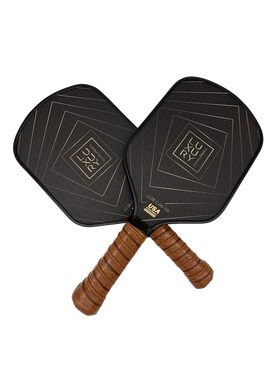
Luxury Custom Pickleball Paddle LUX CAS 16
The Carbon Fiber Heavyweight That Finally Calms Your Hands 🥒💥
Contact
About Luxury Custom Pickleball Paddle LUX CAS 16
Listed in 🏓 Pickleball Paddles, 🏓 Equipment.
The Custom Pickleball Paddle market is usually full of loud colors and louder promises, but the LUX CAS 16 sits in the corner, quiet and dangerous. It represents the pinnacle of Innovative technology, designed for those who have moved past entry-level gear and are looking for a Serious Athlete Set.
You know the feeling. It’s 10:00 AM on a Tuesday at one of the premier country clubs. The sun is already cutting through the humidity, making your shirt stick to your back. You are standing at the kitchen line, knees bent, waiting for the plastic ball to come over the net. Most people lose the point right here. Not because they don't know how to play, but because they are holding a piece of plastic that vibrates like a cheap motel bed. You need performance-grade materials, not toys.
The Anatomy of Control and Custom Design
The LUX CAS 16 isn't trying to be your friend. It is a dense, serious slab of custom design concepts engineered for the player who realizes that power is useless if you can't keep the ball in the court. When you Design Your Paddle, you aren't just picking colors; you are choosing a weapon. This paddle feels distinct in the hand. It has a calculated swing weight and a perfectly tuned balance point.
The Cold Hard Facts ⚡
- 16mm Polypropylene Core: Thick enough to absorb the shock so your elbow doesn't have to.
- Raw Carbon Fiber Face: It creates a massive spin rate because it needs to bite the ball, not pet it.
- Precision-molded process: Thermoformed edges are sealed tight. No dead spots. No excuses.
- Premium Handling: Wrapped in a chestnut leather grip with high-tack grip tape and a signature rubber band to keep everything locked in.
- Stealth Aesthetics: Part of our best sellers list, featuring a black-on-black look that screams quality.
Why the LUX CAS 16 Dominates
Most pickleball paddles act like trampolines. You touch the ball, and it ball jumps three feet too high. The opponent smashes it down at your feet. Point over. With the LUX CAS 16, the Innovative technology inside the 16mm core ensures the ball stays low and lethal
Engineering the Perfect Custom Paddle Designs
The "16" in the name stands for 16 millimeters. In physics, thickness equals absorption. While brands like Six Zero have pushed the envelope, LUXE paddles focus on the "Core Reality." When a fast ball hits this face, the paddle catches it. It allows you to reset the point and drop Hybrid Pickleballs into the kitchen with surgical precision.
Running your fingers over the face reveals the "Surface Grit." This is raw carbon fiber. Smooth branded paddles let the ball slide off, but this texture creates the friction required for an elite spin rate. When you roll your wrist over a drive, the ball dips. It’s not magic; it’s mechanics.
From Corporate Events to Special Events
Beyond the individual player, we specialize in the corporate pickleball paddle space. Whether you are looking for a Pickleball Set for Special Events or unique branded paddles for a tournament, our team is ready to help.
- Customization: We take your custom paddle designs and bring them to life using a precision-molded process.
- Durability: Every paddle includes specialized Edge Guard Tape to protect your investment during intense play.
- Bulk Inquiries: If you have a specific event date in mind, please reach out to our design team early to ensure your Custom Pickleball Paddle order arrives on time.
A Sober Look at the LUX CAS 16
Everything has a cost. Nothing is perfect.
Pros:
- The Soft Game: The 16mm core makes dinking effortless.
- The Stability: High-end performance-grade materials mean off-center hits don't twist the paddle.
- Custom Aesthetics: The ability to move from stealth black to bespoke custom design concepts.
Cons:
- The Power: This is a control-first tool. You provide the muscle.
- The Weight: It has a presence. If you prefer a feather-light swing weight, this might take a few games to get used to.
The Bottom Line
You can keep buying the cheap stuff. You can keep blaming the wind, or the sun, or the partner who missed the third shot drop. Or you can buy a piece of equipment that eliminates the variables.
The LUX CAS 16 is for the player who is tired of the ball popping up. It is for the player who wants to win the hand speed battle at the net. If you are ready to stop fighting your equipment and start fighting the opponent, this is the logical next step.
Grab your Pickleball Set, check your event date, and get back on the court with a Custom Pickleball Paddle that actually performs.
FAQ
1. How do I start the "Design Your Paddle" process? Simply reach out via our contact form or select "Custom" on our best sellers page to upload your logos and colors.
2. Does it come with a specific grip? Yes, our paddles feature a premium chestnut leather grip reinforced with pro-grade grip tape for maximum sweat absorption.
3. Is this suitable for a corporate pickleball paddle order? Absolutely. We specialize in high-volume branded paddles for country clubs and Special Events.
4. What is the benefit of the precision-molded process? It ensures that the swing weight and balance point are consistent across every single paddle we produce, eliminating "dud" spots on the face.
Additional Information
Key information about Luxury Custom Pickleball Paddle LUX CAS 16.
- 🏅 Skill Level:
- 🔰 Beginner, 🎯 Intermediate
- 🛠️ Product / Service Type:
- 💎 Premium, 🔥 Pro-Grade
- 🏷️ Purpose of Use:
- 🏋️ Training & Improvement, 🎟️ Competitive / Tournament
Related Listings
Explore more listings in this category
LUXE Pickleball Core Collection Green
A head-turning carbon fiber pickleball paddle in vibrant Green — textured for spin, built with a polypropylene honeycomb core, and approved for all skill levels from beginner to pro. 🟢
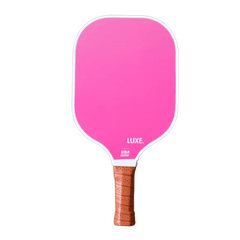
Aesthetic Solids – Pink Pickleball Paddles
.
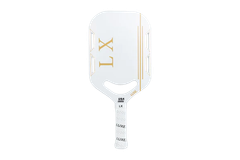
Top luxe LX pickelball paddles
Top luxe LX Pickleball Paddles - Carbon Fiber Pro Set for Spin and Control
JOOLA Radius CGS 16 pickleball paddle
Discover the JOOLA Radius CGS 16 pickleball paddle. Featuring a Carbon Grip Surface and Response Honeycomb Polymer core for ultimate spin, control, and power.